On his 58th birthday, Tuan Tran stood before a Pope County judge and asked for a chance to avoid prison. He described a divorce, the loss of his career, financial desperation and a decision he knew was wrong.
But the decision to accept $3,000 to drive a minivan loaded with marijuana from Oklahoma to Arkansas ultimately resulted in a six-year sentence Tuesday.
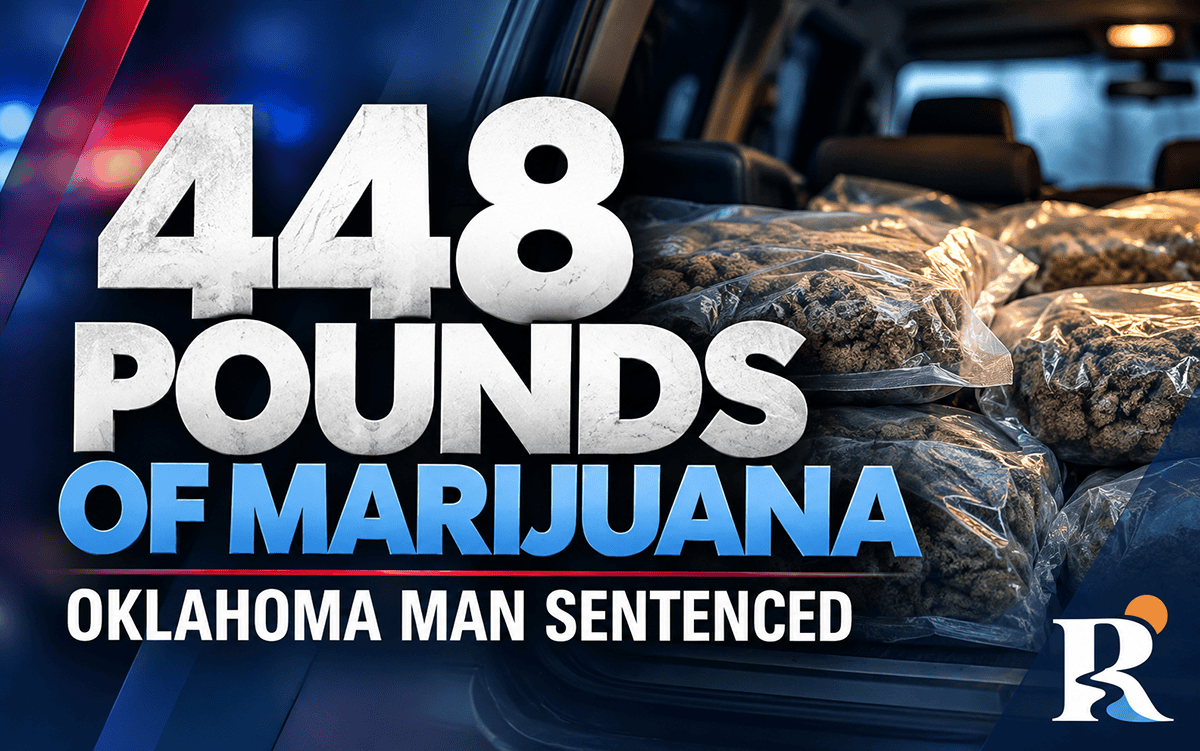
Circuit Judge James Dunham found Tran guilty of two felony drug charges following an October 27 bench trial in Russellville, nearly a year after an Arkansas State Police trooper stopped his Toyota Sienna on Interstate 40 and discovered approximately 448 pounds of marijuana packed into 17 trash bags.
The trial also revealed that what Tran initially described to investigators as a one-time mistake was part of a larger drug transportation operation in which he had previously participated.
The case began around 3:26 a.m. on November 26, 2025, when Arkansas State Police Cpl. Tanner Hess stopped Tran’s eastbound Toyota Sienna near mile marker 72 on Interstate 40.
According to an affidavit for an arrest warrant, Hess approached the passenger side of the van and immediately smelled marijuana.
In the back of the vehicle were large trash bags containing individual vacuum-sealed packages of marijuana.
During Tuesday’s trial, photos showed a van so heavily loaded that its rear seats had been folded into the floor to make room for the cargo. From behind the driver’s seat to the rear hatch, the vehicle was filled with bags stacked almost to the roof.
Hess testified that the packaging was consistent with marijuana being transported for distribution. When prosecutor Arik Cruz asked whether it was common to see marijuana packaged that way, Hess replied, “It’s uncommon not to see it bundled like that.”
Hess arrested Tran and transported him to the Pope County Detention Center. During the drive, Tran told the trooper he had been promised $3,000 to take the van to Jacksonville, Arkansas.
Investigators with the drug task force later searched the vehicle more thoroughly, recovering 17 trash bags containing approximately 448 pounds of marijuana, along with a small bag of suspected cocaine, a straw and $500 in cash.
Drug task force investigators Zachary Toben and Chad Stephenson testified about the evidence collection and subsequent interview with Tran.
Much of Tuesday’s trial centered on a recorded interview Tran gave investigators following his arrest.
In that interview, Tran described himself as a man who had fallen on difficult times. He said he had lost his job in Oklahoma’s marijuana industry and was struggling to pay rent when he attended a party and mentioned that he needed work.
Someone at the gathering offered him $3,000 to drive his van to Arkansas.
Tran told investigators he met the men at a Casey’s gas station in Oklahoma City, where they took his van and returned it loaded. He said he received $200 in advance and another $300 for gas.
The plan, he explained, was to follow another vehicle, a Lexus passenger car, to Jacksonville, Arkansas. Once they arrived at a gas station, the men would take his van, unload it and return with his payment.
Tran acknowledged he suspected the arrangement was illegal.
“I thought to myself, ‘this is illegal.’ But I needed the money for the rent,” he told investigators.
He initially claimed the delivery was his first involvement in such an operation.
But investigators had evidence suggesting otherwise.
License plate reader records showed Tran’s vehicle had previously traveled through Arkansas. When detectives confronted him with that information, his explanation began to change.
He initially described visiting a friend and going to casinos, but investigators questioned inconsistencies in his account, including his inability to provide the friend’s actual name.
Eventually, Tran acknowledged making previous trips to become familiar with the route.
Stephenson testified that Tran ultimately admitted helping the organization move drugs from Oklahoma into the Little Rock area and transport money back to Oklahoma.
During the recorded interview, Stephenson challenged Tran’s explanations, telling him, “Easy money is never easy.”
Investigators also questioned Tran about the suspected cocaine recovered from the vehicle. Tran denied ownership of the substance.
At the conclusion of the prosecution’s case, public defender Drew Curtis moved to dismiss both charges.
Curtis challenged the marijuana charge in part because investigators acknowledged that the scale used to determine the approximately 448-pound weight was not certified.
He also argued that prosecutors had failed to establish that Tran knowingly possessed the cocaine recovered from the van.
Dunham denied both motions.
The defense presented no additional evidence during the guilt phase of the bench trial, and Dunham found Tran guilty of possession of marijuana with purpose to deliver, involving at least 100 pounds but less than 500 pounds, a Class A felony, and possession of cocaine, a Class D felony.
With the guilty verdict decided, Tran took the witness stand during the sentencing phase and gave the court a more personal account of the circumstances leading up to his arrest.
Originally from Vietnam, Tran testified that he had been an American citizen for 46 years. He earned a bachelor’s degree in electrical engineering and spent much of his adult life working in that field.
He said his career was disrupted when the company where he worked closed during the COVID-19 pandemic.
After his marriage of 30 years ended in divorce in 2022, Tran moved to Oklahoma, where he became involved in the state’s legal marijuana cultivation industry.
He described working with a software system used to track marijuana plants and prepare regulatory reports. Later, he took a job trimming marijuana plants.
When that employment ended, he said, his financial situation deteriorated.
Tran also described struggling emotionally following his divorce and career setbacks, telling the court he had become depressed, isolated and occasionally turned to drugs.
“I was lost,” he testified.
Since his arrest, Tran said he had relocated to Houston, where he was living with family members and helping care for his 83-year-old father, who had recently undergone heart surgery.
He described himself as his father’s primary caretaker and said he was looking for employment in Texas.
During cross-examination, Cruz questioned Tran about his involvement with the people who recruited him to transport the marijuana.
Tran acknowledged that they were people he knew through Oklahoma’s marijuana industry and that he had accepted the job because he was behind on rent.
“I was desperate. I’m sorry,” he told the court.
Cruz argued that financial hardship did not excuse Tran’s participation in a drug distribution operation and that incarceration was necessary.
Curtis, however, urged the judge to consider probation.
He pointed to Tran’s age, lack of a previous felony record and history of employment, arguing that the offense occurred during an unusually difficult period in his life.
Curtis described Tran as nonviolent and someone who did not pose an ongoing threat to the community.
“This isn’t someone who had a real talent at it,” Curtis argued. “He’s an amateur at this.”
Instead, Curtis suggested an extended probationary sentence, a substantial fine and requirements for counseling or other treatment to address the circumstances that contributed to Tran’s decisions.
Dunham ultimately rejected the request for probation but imposed a shorter prison sentence than prosecutors had sought.
On the marijuana conviction, Dunham sentenced Tran to six years in the Arkansas Division of Correction, followed by a 10-year suspended imposition of sentence, and a $5,000 fine.
The judge also ordered Tran to attend Alcoholics Anonymous and Narcotics Anonymous meetings during the suspended portion of his sentence.
For the cocaine conviction, Tran received a two-year correctional sentence, followed by a four-year suspended imposition of sentence, and a $1,500 fine.
Tran was advised of his right to appeal, and the court scheduled a review for November 23 concerning the appeal decision.